

















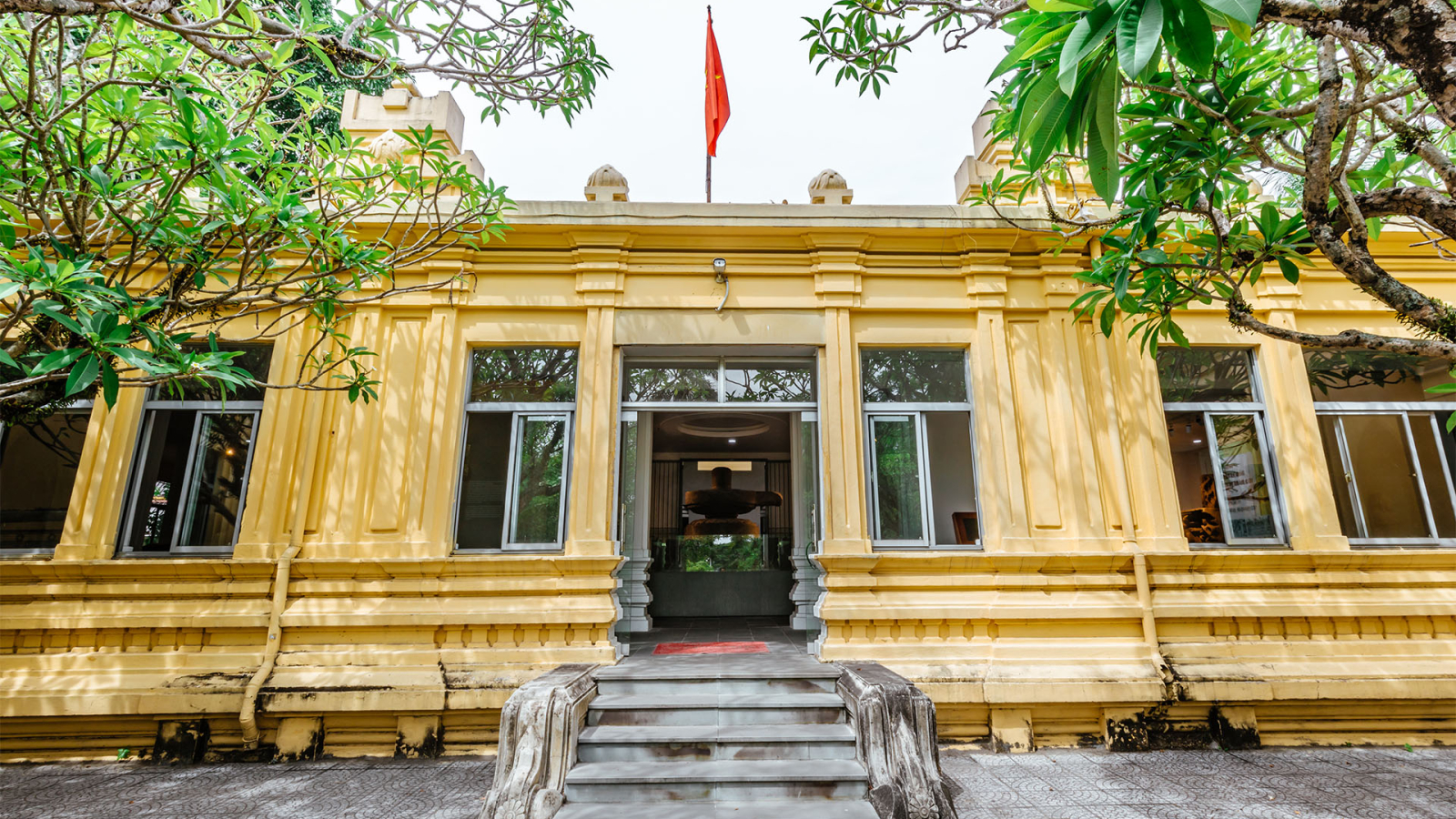

Da Nang Museum of Cham Sculpture – Home to the Finest Heritage of the Ancient Champa Civilization. (Source: Collected)
1.2. History and development
With a history spanning more than a century, the Da Nang Museum of Cham Sculpture has become one of Central Vietnam’s most significant cultural and historical landmarks. Home to thousands of invaluable artifacts from the ancient Champa civilization, the museum has also played a pivotal role in preserving Vietnam’s cultural heritage.
- 1915: Construction of the museum officially began.
- 1916: The main building was largely completed, and the first exhibition spaces were established.
- 1919: The museum officially opened to visitors from Vietnam and abroad.
- 1930: The museum underwent its first major expansion as the collection of excavated artifacts continued to grow. During this period, the exhibition layout was organized by geographic region—a curatorial approach that remains in use today.
- 2002: A second major expansion added new exhibition galleries, storage facilities, conservation workshops, and research rooms to better preserve and study the growing collection.
- 2011: The Da Nang Museum of Cham Sculpture was recognized as a Grade I Museum in Vietnam, reaffirming its vital role in safeguarding and promoting the cultural legacy of the Champa civilization.
- 2016: The City of Da Nang carried out extensive restoration and upgrades to the museum’s buildings and exhibition spaces while carefully preserving its distinctive historic architectural style.
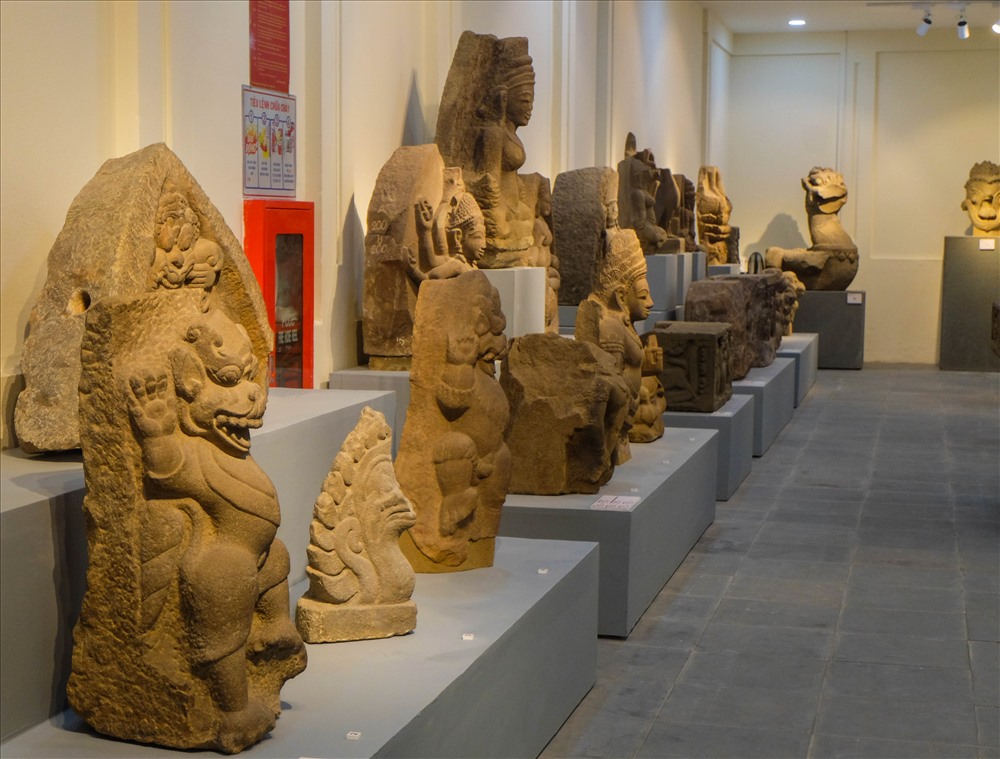
A timeless exhibition space showcasing the unique artistry of Cham sculpture. (Source: Collected)
1.3. Admission fees and opening hours
When planning a visit to the Da Nang Museum of Cham Sculpture, many travelers look for information about admission fees and opening hours to better organize their itinerary. The museum is currently open every day of the week, making it easy to combine with visits to other popular attractions in downtown Da Nang.
- Admission: VND 60,000 per adult; VND 10,000 per student
- Opening hours: 7:00 AM – 5:00 PM daily
The Da Nang Museum of Cham Sculpture also offers free or discounted admission for eligible visitors in accordance with current regulations. To help guests gain a deeper understanding of the history and culture of the ancient Champa civilization, the museum provides audio guides as well as guided tours for groups.
2. Highlights of the Da Nang Museum of Cham Sculpture
2.1. Admire the Museum’s Unique Architecture
One of the first things that impresses visitors to the Da Nang Museum of Cham Sculpture is its distinctive architecture, which beautifully blends classical elegance with artistic heritage. The museum was designed by French architects Delaval and Auclair based on the recommendations of Henri Parmentier from the École française d’Extrême-Orient (EFEO). Its architecture harmoniously combines the design elements of ancient Champa temples with European Gothic influences, creating a truly iconic landmark in the heart of Da Nang.
The main building features pointed vaulted roofs and a warm yellow façade that evokes a timeless atmosphere. The exhibition halls are designed with an open layout and large windows that maximize natural light, enhancing both the spacious interior and the beauty of the Cham sculptures on display. As visitors stroll through the grounds of the Da Nang Museum of Cham Sculpture, they can also enjoy the nostalgic ambiance created by moss-covered walls, lush greenery, and fragrant white frangipani blossoms blooming throughout the museum courtyard.

A unique blend of French colonial architecture and Cham artistry at one of Vietnam’s most distinctive museums. (Source: Collected)
2.2. Explore priceless cham artifacts
Today, the Da Nang Museum of Cham Sculpture houses more than 2,000 artifacts related to the ancient Champa civilization, with around 500 of them on public display. Most of these are original pieces dating from the 7th to the 15th centuries, primarily crafted from sandstone, terracotta, and bronze. Through these exquisitely carved sculptures, visitors can gain valuable insights into the culture, beliefs, and artistic achievements of the ancient Cham people.
Many of the museum’s exhibits depict prominent Hindu deities such as Shiva, Naga, and Lakshmi, alongside sculptures inspired by everyday life. The collection is organized according to major archaeological sites, including My Son, Tra Kieu, Thap Mam, Quang Tri, and Quang Ngai, allowing visitors to appreciate the regional diversity of Champa architecture and sculpture.
2.3. Admire Vietnam’s National Treasures
One of the highlights of visiting the Da Nang Museum of Cham Sculpture is the opportunity to see nationally recognized treasures that showcase the historical and artistic excellence of the Champa civilization.
The museum is currently home to three artifacts officially designated as National Treasures: the My Son E1 Altar, the Tra Kieu Altar, and the Tara Bodhisattva Statue. These masterpieces exemplify the remarkable craftsmanship and distinctive artistic vision of the ancient Cham people.
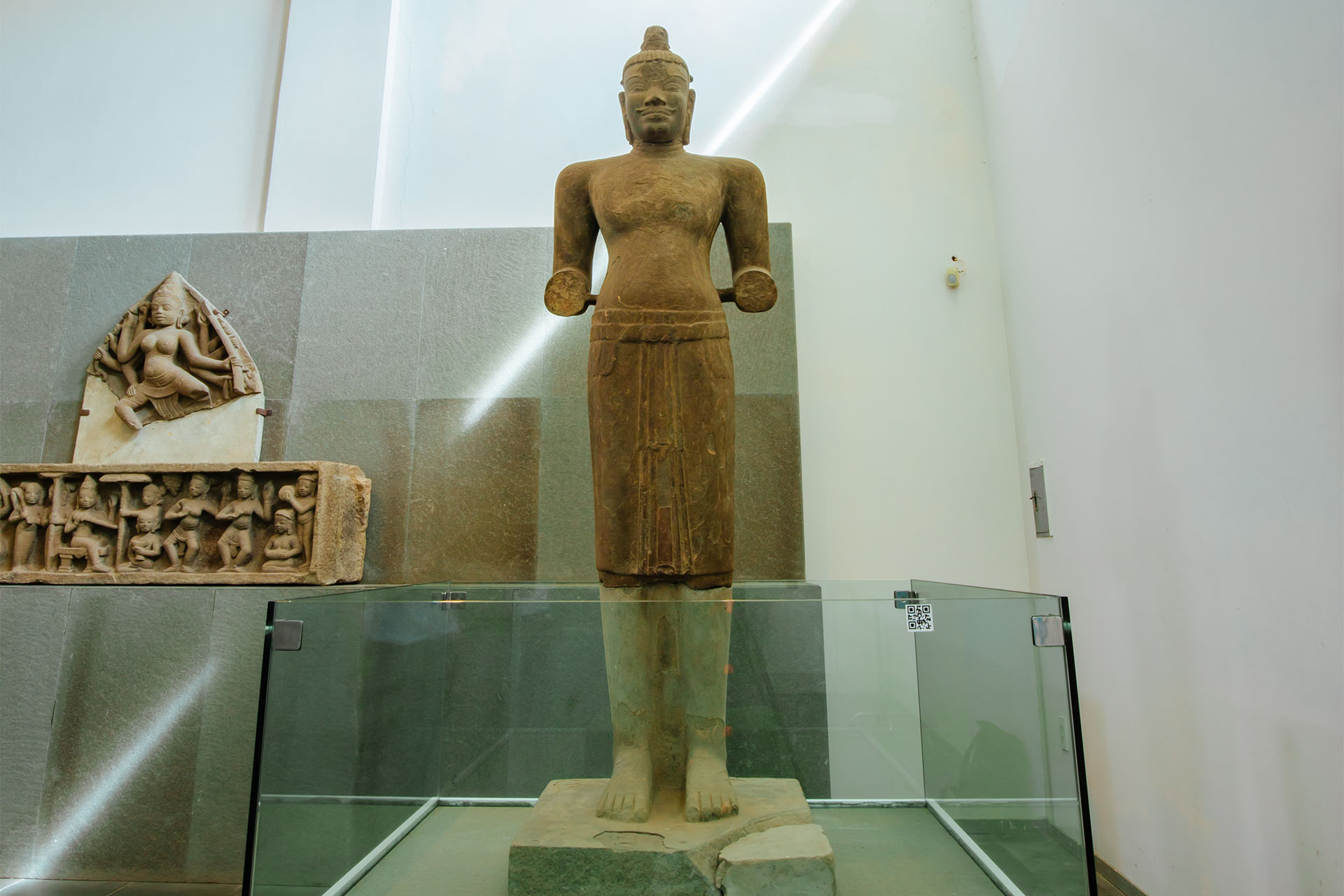
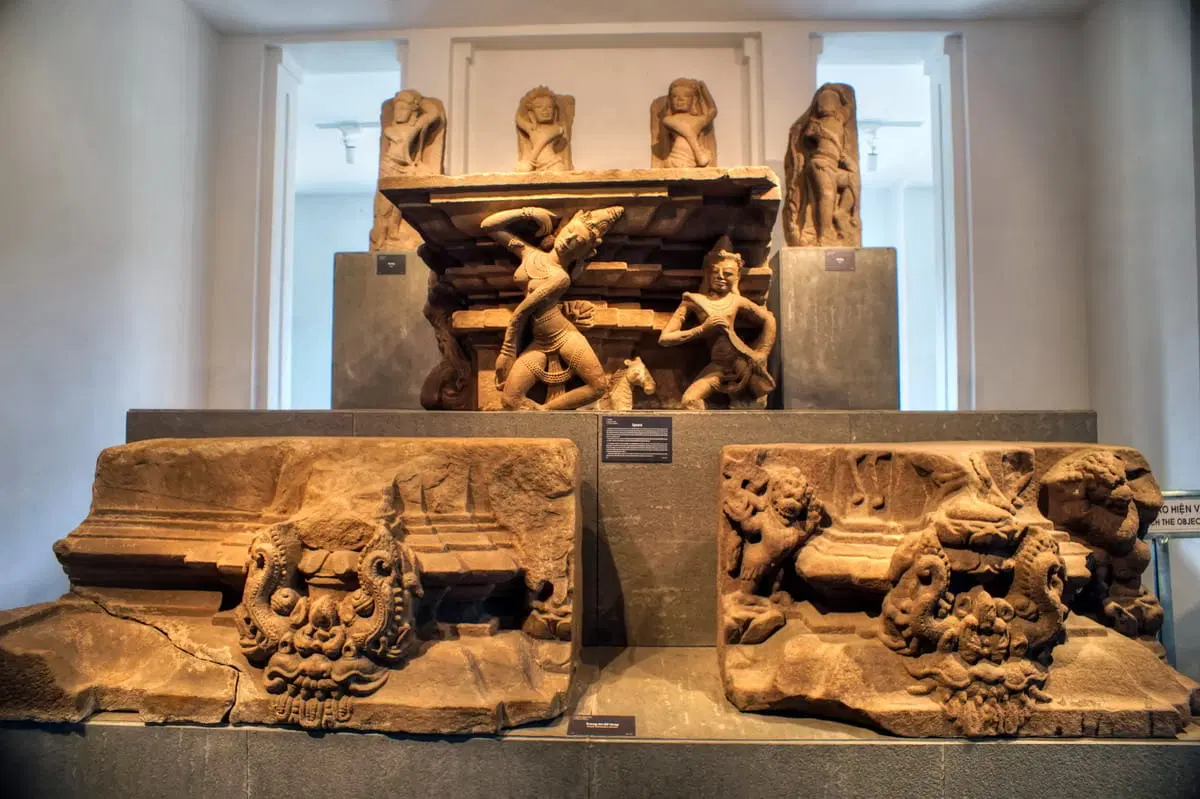

Experiencing the DIFF Festival is a must when visiting Da Nang in the summer of 2026. (Source: Collected)
More than just a repository of thousands of invaluable Champa artifacts, the Da Nang Museum of Cham Sculpture is a cultural landmark that preserves the rich history and artistic heritage of central Vietnam in the heart of the coastal city. With its historic architecture, distinctive exhibition spaces, and remarkable collection of priceless relics, the museum offers visitors a fascinating journey into the legacy of the ancient Champa civilization. If you’re passionate about history and art or simply want to gain a deeper understanding of Central Vietnam’s cultural heritage, be sure to add the Da Nang Museum of Cham Sculpture to your Da Nang itinerary.

